Why Is My Jaw Clicking? What It Means and When It Needs Treating
Date Published:
29 Sep 2026
Article Summary
Jaw clicking gets mistaken for damage. It usually is not. This article explains what the click actually is, why it happens on one side more often than both, why eating and chewing make it louder, and the difference between a click you can ignore and one worth doing something about. It also covers what treatment involves, what it will not do, and when a dentist is the better first call.
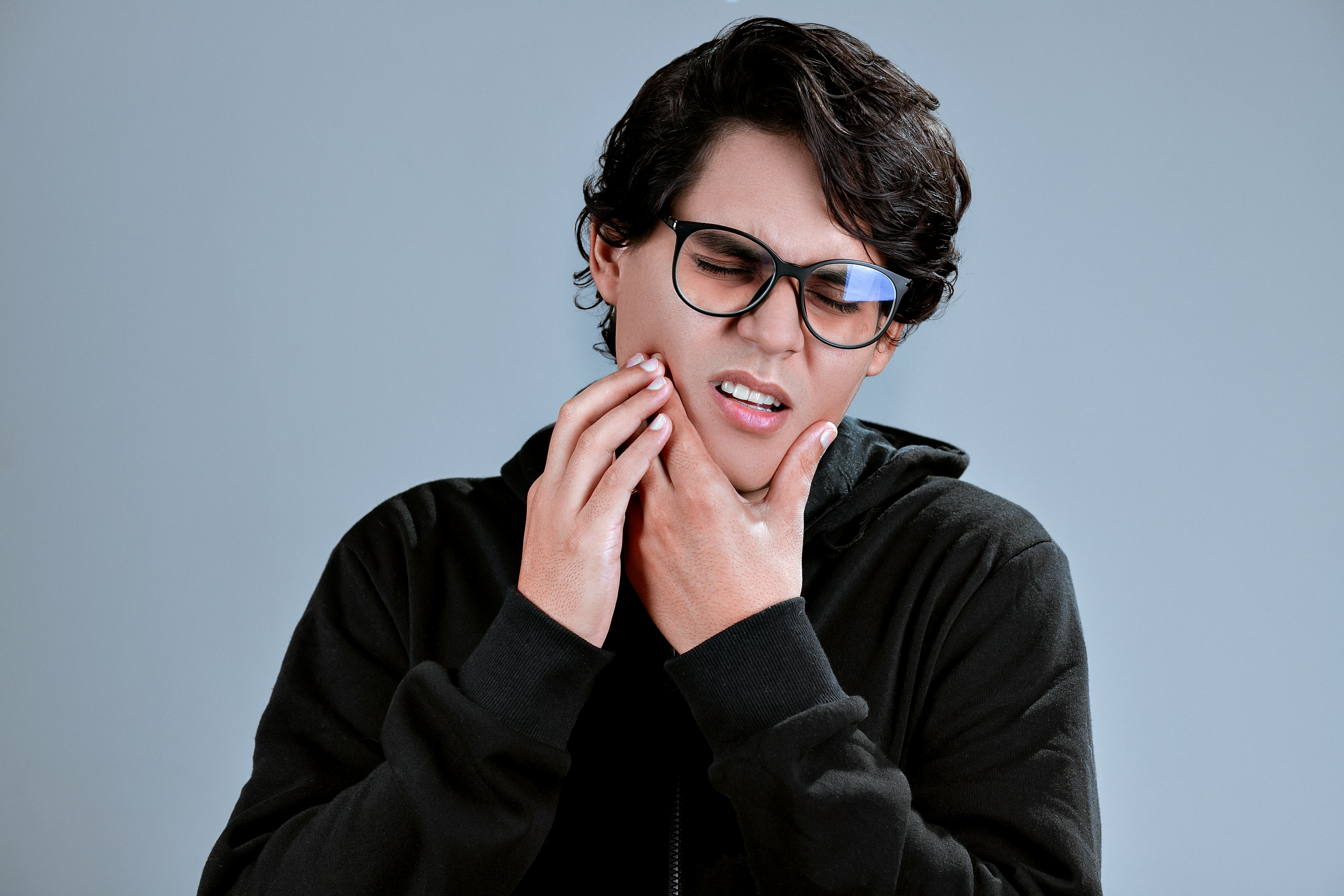
A clicking jaw is the sound of the small disc inside your jaw joint moving out of position and snapping back as you open or close. It is common, and on its own it is usually not a sign of damage. Plenty of people click for years with no pain and no loss of function, and those people generally do not need treatment. What changes the picture is company. Clicking that arrives with pain, with the jaw catching or locking, with headaches, or with a jaw that will not open as far as it used to, is worth having assessed. The cause is almost never the joint by itself. Clenching, grinding, sustained desk posture and a stiff upper neck all load the jaw, and the click is where that load shows up. Treatment targets the cause rather than the noise, and most people improve without anything invasive.
Key Takeaways
- The click is a disc inside the joint slipping and snapping back. It is a mechanical noise, not a sign of something tearing.
- Painless clicking on its own is common and usually needs nothing.
- Clicking with pain, locking, headaches or reduced opening is worth assessing.
- The jaw is rarely the whole problem. Clenching, grinding and a stiff upper neck load it, and the click is where that load surfaces.
- Most people improve with hands on treatment, targeted exercise and changing the habits driving the load. Very few need anything invasive.
Why is my jaw clicking?
Your jaw joint sits just in front of your ear, and it is unusual. Most joints are two bones and some cartilage. This one has a small disc sitting between the two bone surfaces, and that disc is meant to glide along with the jaw as it opens.
When the disc and the jaw stop moving together, the disc gets left behind for a fraction of a second, then snaps back into place. That snap is the click. Sometimes you hear it, sometimes you only feel it, and often the person sitting next to you hears it before you notice.
So the click is a timing problem, not a breakage. Nothing tears to make that noise. That distinction matters, because most people who come in about a clicking jaw have already decided something is wrong with the joint, and they are usually carrying more worry than the situation warrants.
Is jaw clicking without pain something to worry about?
Usually not.
If your jaw clicks, does not hurt, opens fully and has been doing exactly this for years without changing, that is a joint with a slightly noisy movement pattern. It is not a condition. Treating it would be treating a sound.
What I would pay attention to is change. A click that has recently appeared, got louder, moved to the other side, or picked up company. Company means pain, catching, locking, headaches through the temples, or a jaw that will not open as wide as it did six months ago. Any of those and the click stops being background noise and starts being information.
That is the practical test. Not is it clicking, but has anything changed, and is it bothering you.
Why does my jaw click when I eat or chew?
Because chewing is the hardest thing you ask that joint to do.
Opening your mouth to speak is a small, light movement. Chewing is repeated, loaded, and often one sided without you noticing. Load exposes a timing problem that a light movement hides, which is why plenty of people only click when they eat.
It tends to be worse with food that needs real work. Steak, crusty bread, apples, anything chewy. If you have noticed the click showing up with a bagel and disappearing with soup, that is not a coincidence, and it is a useful thing to mention at an appointment.
Why does my jaw click on one side only?
Because you are not symmetrical, and almost nobody is.
Most people chew predominantly on one side. Most people sleep with one side of the face pressed into the pillow. If you clench, you often clench harder on one side. And if you have had dental work, an extraction, or a tooth you avoid biting on, your jaw has quietly reorganised around that.
Over time one side accumulates more load than the other, and the side doing more work is the side whose timing goes first. That is why one sided clicking is far more common than clicking on both.
It is the same pattern we see everywhere in the body. A calf that is not strong enough hands the work to the Achilles. A hip that is not controlling the knee hands it to the patellar tendon. Load has to go somewhere, and it goes to whatever is available. The jaw is no different. The click is where the load ended up, not where the problem started.
What is actually causing the click?
In most cases it is a combination, which is why treating one thing in isolation tends to disappoint.
Clenching and grinding. The most common driver by a distance. Often it happens overnight and you have no idea you are doing it. The tell is waking with a tight jaw or a dull temple headache. Better Health Channel has a useful rundown of teeth grinding and what tends to sit behind it.
Sustained posture. Hours at a desk with the head sitting forward of the shoulders changes the resting position of the jaw and loads the muscles that control it. This is not about there being a correct way to sit. It is about how long you hold whatever position you are in.
A stiff upper neck. The jaw and the top of the neck share nerve supply and a lot of muscle. A neck that does not move well makes the jaw work harder, and treating the jaw while ignoring the neck is why some people improve for a fortnight and then slide back.
Stress. Not as a vague explanation, as a mechanical one. Stress raises resting muscle tone, and in a lot of people the jaw is where that shows up first.
Old trauma. A knock to the jaw, a dental procedure that required long periods of holding the mouth open, an old fracture. Sometimes the click dates back to something specific.
healthdirect has a good general overview of temporomandibular joint dysfunction if you want to read further.
Can you stop a clicking jaw?
Sometimes the click goes. More often the click quietens down and stops mattering.
I would rather be straight about that than promise a silent jaw. The goal of treatment is not silence. It is a jaw that opens fully, does not hurt, does not catch, and that you stop thinking about. Plenty of people finish treatment with a faint click and no interest in it whatsoever, because the thing that bothered them has gone.
Where the click does resolve, it is usually because the load driving it got dealt with. Where it persists, the joint has often been moving that way long enough that the pattern is simply how that jaw works now. That is not a failure, and it is not a reason for anything drastic.
How does physiotherapy treat a clicking jaw?
Four parts, and the first one does most of the work.
Assessment, properly. How far the jaw opens, whether it deviates to one side on the way, how the upper neck moves, where the muscle tension sits, what your days look like, whether you wake with a tight jaw. Imaging is rarely needed to work this out. If you can only tell me one thing, tell me what changed in the weeks before it started. That is usually where the answer is.
Hands on treatment. Releasing the jaw and neck muscles that have been carrying the load, and restoring movement through the joint and the upper neck. Dry needling into trigger points in the jaw and neck where it is appropriate.
Targeted exercise. Controlled opening work to retrain the movement pattern, plus strength and mobility through the neck and upper back. Small and specific, a few minutes a day, not a programme.
Changing what is driving it. This is the part that decides whether it holds. Catching daytime clenching, managing overnight grinding, breaking up long stretches in one position, and sometimes a conversation with your dentist about a splint. Understanding why your jaw is doing this is most of the treatment. If you cannot explain your own problem back to me, I have not done my job.
If headaches are a significant part of the picture, healthdirect’s page on headaches is worth a read alongside this, since jaw driven headache is only one of several patterns and it helps to know which you are dealing with.
When should you see someone about jaw clicking?
Book an assessment if any of these apply:
- The clicking comes with pain in the jaw, ear, cheek or temple
- Your jaw catches, sticks or locks, even briefly
- You cannot open as wide as you used to
- You are getting regular headaches through the temples
- You wake with a tight or aching jaw
- The click has recently changed, in volume, in side, or in how it feels
- It is making eating unpleasant enough that you have started avoiding foods
If it clicks, has always clicked, and does nothing else, you are fine. Get on with your day.
Should you see a physio or a dentist?
Both are reasonable first calls, and which one depends on what else is going on.
Start with a dentist if there is tooth pain or sensitivity, if your bite feels like it has changed, if the problem appeared after dental work, or if you know you grind and want a splint made.
Start with a physio if the issue is movement and muscle. Clicking, catching, limited opening, jaw pain that comes with neck pain or headaches, or pain that tracks with your work and screen time.
Plenty of cases want both. A splint protects the teeth from grinding, but it does not address the muscle tension and neck stiffness driving the grinding in the first place. We refer to dentists regularly and it works well when both sides are talking.
There is more detail on that decision in our article on when to see a physio and when to see a dentist for jaw pain.
Frequently asked questions
Why is my jaw clicking? The disc inside your jaw joint is slipping slightly out of position as you open and snapping back. It is a timing problem between the disc and the jaw, not a tear. It is common and on its own usually not a sign of damage.
Is jaw clicking without pain something to worry about? Usually not. A jaw that clicks, does not hurt and opens fully has a slightly noisy movement pattern rather than a condition. Get it assessed if the click changes, or arrives with pain, locking, headaches or reduced opening.
Why does my jaw click when I eat? Chewing is the most loaded thing your jaw does. Load exposes a timing problem that light movements like talking hide. It is often worse with chewy or hard food, which is a useful detail to mention at an assessment.
Why does my jaw only click on one side? Because you are not symmetrical. Most people chew mainly on one side, sleep on one side of the face, and clench harder on one side. The side taking more load is the side whose timing goes first, so one sided clicking is more common than both.
How do you stop a clicking jaw? By dealing with what is loading it rather than the noise itself. That means hands on treatment for the jaw and upper neck, targeted exercise to retrain the movement, and changing the clenching, grinding or sustained positions driving it. Sometimes the click stops. More often it quietens and stops mattering.
Do I need a scan or a referral to see a physio about my jaw? No referral is needed to see a physiotherapist in Australia. Jaw assessment is hands on, and imaging is only occasionally useful, generally where a fracture or arthritis is suspected.
Is TMJ the same as TMD? TMJ is the joint itself, the temporomandibular joint. TMD stands for temporomandibular disorder and covers problems with the joint and the muscles around it. In conversation people use TMJ for both.
Can jaw problems cause ear pain or ringing? They can. The joint sits directly in front of the ear canal, so jaw problems often present as ear fullness, ear ache or ringing with nothing wrong with the ear itself. An assessment can usually tell the difference, and if it looks like an ear problem you get sent to the right person.
Author bio block
Chris Slaviero is the Principal Physiotherapist and Owner of n1 physio in Penrith. He holds a Master of Physiotherapy from the University of Sydney, along with bachelor degrees in Sport and Exercise Science and in Nutrition, and is an AHPRA registered physiotherapist with 12 years of clinical experience.
“My approach to physio is precise and thorough and deliberately unhurried, because the fastest way to a good outcome is understanding the whole picture before you start treating it. The one thing I want every client to feel when they leave is that they were properly listened to, and that they know exactly what’s going on and what happens next. n=1. Always.”
Next Steps
CTA
If your jaw is clicking and it has started bothering you, an assessment will tell you what is driving it and what the plan looks like. We see jaw pain at both Penrith and South Penrith. Book a time, or send us a question first if you want to check whether it is worth coming in.
Related Articles
Discover More Related Articles
Explore more expert advice on managing pain, moving well, and feeling more like you. Our team shares practical, evidence-informed guidance to help you understand your body and take the next step with confidence.

Jaw Pain: When to See a Physio and When to See a Dentist
Jaw Clicking and TMJ

Physiotherapy for Each Age Bracket: How Care Changes Across Every Life Stage
Related Articles
Discover More Related Articles
Explore more expert advice on managing pain, moving well, and feeling more like you. Our team shares practical, evidence-informed guidance to help you understand your body and take the next step with confidence.
Heading
Locations
Where to Find Us
We’re here for you at both our Penrith and South Penrith practices.

Penrith
105/64-68 Derby St, Kingswood NSW 2747

South Penrith
Southlands Shopping Centre
T11/2 Birmingham Rd, South Penrith NSW 2750
Let's Talk
Ready to Put Knowledge Into Action?
Our blogs give you the tips, but real progress comes with the right support. At n1 Physio, we tailor treatment and guidance to your goals, so you can move better, recover faster, and stay strong. Book your session today and take the next step toward lasting results.